Skip to Content


University Archives

The University Archives in the Special Collections Research Center (SCRC) is the memory of the College of William and Mary, documenting its history from before the founding in 1693 to the present. The wide variety of materials relating to the College and its people through the years includes official records created in the College's daily operations, personal papers, organizational records, photographs, publications, video and audio recordings, books and articles written by or about past or current William and Mary people, scrapbooks, and artifacts.

Time has taken its toll on the records of the College. The Wren Building, the main campus building, burned in 1705, 1859, and 1862, destroying many of the original records. Occupation of the Wren Building by military units during the American Revolution and the Civil War also did significant damage to the records. There is, however, still a wealth of information on all eras of William and Mary's history. Late nineteenth and twentieth-century materials comprise the bulk of the University Archives collection, although a number of earlier documents do still exist. From 1888 on, most of William and Mary's vital records are intact and available, either in paper or microfilm formats, and the number of personal papers, organizational records, publications, and other material is also more complete. Guidance in finding materials is available at the SCRC's Access Tools page.

Official Records

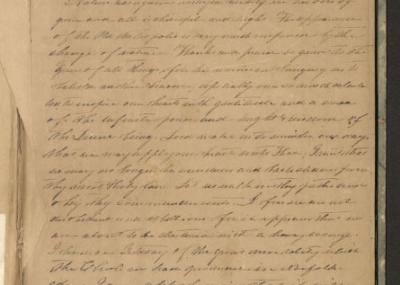
The most voluminous part of the University Archives are the records created in the day-to-day activities of the College. These include correspondence and subject files from offices, reports, committee minutes and files, and financial data. Video, audio, and phonographic recordings documenting many of the events and concerts on campus are also a part of the Archives. Unfortunately, many of the early original records were destroyed by fire, military occupation, and the normal effects of time. The College's charter given to William and Mary in 1693 was lost sometime in the past, but the Archives was able to purchase the 1693 copy which was sent to Edmund Andros, then Royal Governor of the colony of Virginia. From 1888 on, however, most of the vital records of the operations of William and Mary are intact and available on paper or microfilm. Prior to 1888 the records consist of scattered documents and ledger books.

A small group of papers documents some of the activities of President Benjamin S. Ewell between 1854 and 1888. However, the records of the Office of the President really begin in 1888 with President Lyon G. Tyler's era and continue to the present. These records are a rich source of information about the activities, events, issues, and people throughout William and Mary's recent history.

Financial records somehow fared better over the years. The earliest extant Bursar's records begin with 1745. Between 1777 and 1850 there is a significant gap, and there are some smaller gaps until 1888. From then on the financial records are fairly complete, although varying in the amount of detail which can be researched. Most of these records are available on microform.

Knowledge of who has attended William and Mary since 1693 varies. Before 1827, the records are spotty, but after that date, they appear to be surprisingly complete, although it is not possible to verify all of this information. Few actual records of early students are still in existence other than the matriculation records from 1827 to 1920. They record the students in each session, along with names of parents or guardians and their addresses. The Virginia Historical Index compiled by Earl Gregg Swem contains references to many early alumni and others associated with William and Mary. Copies are available in Swem Library and in the SCRC lobby and an overview of the index (also known as the Swem Index) is available from the Library of Virginia. Over the years extensive research has been done, resulting in the listing of many alumni. The earliest list in the Archives was published in 1859, with later ones published in 1870, 1874, 1932, 1941, 1978, and 1992. The Provisional List of Alumni, 1693-1888 is available online and includes alumni, faculty, and members of the Board of Visitors. The Catalogue of the Alumni and Alumnae For the Years 1866-1932 is also available online and includes alumni sorted by geographic area as well as by graduation year and alphabetically. The University Archives staff published an index to Commencement programs for the years 1932 to 1976, which is available in the SCRC. Further, for twentieth-century students, there are lists in annual catalogs and campus directories available to researchers. The official "permanent student records" containing transcript information are confidential and therefore not available for use.

Faculty are also included in the early listings of students. The minutes of meetings of the faculty begin in 1729 and, with only one gap between 1784 and 1817, continue to the present. The first volume of minutes of faculty meetings, 1729 to 1784, has been published in the William and Mary Quarterly, and is indexed in the Virginia Historical Index. Lists of individual faculty members and administrators are included in most annual campus directories and annual course catalogs (going back to 1829). A card file documenting past William and Mary faculty and administrators is available. The official personnel files of faculty and other staff are confidential and therefore not available for use.

The earliest existing bound volume of minutes of meetings of the Board of Visitors, the College's trustees, begins in 1860. There are a few other scattered records of their meetings prior to that time, including a bound volume of Faculty Reports to the Board of Visitors from 1831 to 1835. The early Board of Visitors records contain interesting and detailed information about many aspects of the administration of the College, but more recent minutes are primarily an official record of actions taken.

There are many other smaller groups of official records within the Archives which deal with every possible facet of College operations, from academic and curriculum matters to the maintenance of campus facilities and grounds. Not all series of records, however, are complete from the origination of the function to the present. Samplings of course syllabi and tests, student and faculty speeches, and even some textbooks used at the College are also included in the Archives. In addition, many early documents are contained in a special group of records entitled "The College Papers," which has its own index available in the SCRC.

The Archives card catalog provides overall access to these materials. Most groups of records have inventories, or folder-heading lists, to help researchers pinpoint the location of needed information. Complete information about finding materials is available here.

Student Organization Records

Materials generated by the students themselves give us the best view of student life at William and Mary, since student organizations are poorly reflected in administrative office files. Few records survive from the eighteenth and nineteenth centuries, but it is possible to research the existence and activities of most twentieth-century groups and even some of the earlier as well. The Archives contains official records such as minutes of meetings, publications, artifacts, and other information about many student organizations, including several sororities and fraternities.

All information and materials relating to student organizations can be located through the SCRC Collections Database and the other guides described at the Access Tools page. A sample of the records of student organizations and personal papers in the SCRC is available in the SCRC Collections Database. Scrapbooks created by students are often a good source of information about student groups, as are personal papers donated by alumni. In addition to papers, a wide range of artifacts relating to student groups are preserved in the University Archives Artifact Collection.

Organizations may want to review the Tips for PreservingYour Group's History as one tool in ensuring that the history of the organization is preserved for future students and scholars. Organizations should also contact Amy Schindler, the University Archivist, with any questions or to arrange the transfer of records to the University Archives (acschi@wm.edu or 757-221-3094).

Student Publications

There are several major student publications which are rich sources of information about students and student life. In 1911 the student newspaper, The Flat Hat, was first published, and since then has announced and documented campus events and reflected student opinion. Until a few years ago, Archives staff indexed The Flat Hat as well as the Alumni Gazette and the William and Mary News by subject and by personal name. This index is available as a card file in the SCRC. All three of these publications are available on microfilm, except for the most recent years.  The Flat Hat is also available online. The Colonial Echo, the student yearbook, began publication in 1899, and has continued to record students, organizations, and activities each year. In some years, in addition to a photograph of a group and a list of its members, a brief history of the group or a list of its activities for the year is included. Literary magazines have been published by students at William and Mary since 1890. The earliest one, the College Monthly, included information about campus events and alumni news in addition to poems and stories until about 1911. Later issues continued to carry news about alumni, editorials, and occasional articles about student life.

Other publications in the Archives also contain extensive information relating to student organizations. Student handbooks, student government handbooks, College catalogs, the Alumni Gazette, and publicity materials and programs for specific events sponsored by student groups all provide in-depth documentation of the history and activities of students and student organizations.

Literary Societies

Among the oldest records of student organizations are those from the various literary societies, of which William and Mary had several. These societies, which were popular all over the country in the late eighteenth and nineteenth centuries, sought to train their members in public speaking by sponsoring debates and dramatic readings. Some also assigned their members to write essays, which were then critiqued. While the Archives does not have a complete set of records from all of the literary societies, substantial quantities of these records do exist, including nineteenth and twentieth- century minute books, constitutions, by-laws, membership lists, and treasurer's books. Because they flourished at a time when college libraries were all but closed to undergraduate students, a number of literary societies had their own libraries. Archives has the library accession book for the Philomathean Literary Society. The Phoenix and Philomathean Societies, although not the oldest groups, were the longest lived and therefore more material exists for them. After women were admitted in 1918, they began their own societies, the Whitehall and the J. Lesslie Hall Literary Societies. Information on them can be found in the Archives, although official records do not exist. In addition, there are literary society pins, ribbons, medals, printed copies of speeches delivered to the societies, and other materials detailing the activities of these groups.

Student Government

Student government is also represented. Over the decades many changes have taken place in the structure and titles of the governing bodies. The Archives has minute books for the meetings of a number of these, as well as constitutions and lists of members. Women Students' Cooperative Government Association (WSCGA) minutes cover 1921 to 1954. The minute book of the Men's Student Body also contains minutes of joint meetings of the men's and women's student government officers for part of the same period. Minutes of meetings for the General Cooperative Committee (which included administrators as well as both women and men students), Student Assembly, and Board of Student Affairs date from 1940 to 1973.

Phi Beta Kappa

Phi Beta Kappa, the premier honor society in the United States, was founded at William and Mary in 1776. The original minute book of the society is preserved in the Archives, as are later minute books, programs, poems read at meetings, some treasurer's records, and articles about the society at William and Mary. The Archives possesses the Phi Beta Kappa key of Peyton Short, who joined the society in 1780. It is the only eighteenth-century key from William and Mary known to exist. The Archives does not attempt to document the history of the national society, leaving that to the PBK headquarters in Washington, D. C. Other honor societies are represented in the Archives as well.

Personal Papers

In addition to official records created in the day-to-day work of the College, the University Archives also collects information and materials by and about individuals who have been associated with William and Mary. This includes personal papers; biographical information; newspaper clippings; books, articles, and speeches written by or about College people; family and genealogical information; correspondence; student papers; doctoral dissertations and honors and master's theses by William and Mary students; diplomas; scrapbooks; photographs; lecture notes taken while a student at the College; and memorabilia.

Faculty, staff, and students are encouraged to donate their papers to the SCRC for the benefit of future researchers. The University Archives staff is available to advise individuals in preparing their personal papers for transfer, completing a deed of gift, and arranging the physical transfer of the papers. Information about donating material to the Special Collections Research Center is available at the Donation of Material page, which includes guides for faculty and staff, student organizations, and individuals.

Scrapbooks created by students and staff while at William and Mary give a fascinating and intimate glimpse of campus life. Often including programs of events, mementoes, dance cards, photographs of fellow students and staff and the campus, invitations, and special notes and letters, scrapbooks are an important part of the collection.

Information on individuals may be found in a variety of locations in the SCRC, including the University Archives Faculty-Alumni File Collection, University Archives Photograph Collection, and other collections. Books written by individuals associated with the College of William and Mary are also accessible through Swem Library's online catalog. Some additional collections of papers relating to individuals with ties to William and Mary are part of the SCRC's Manuscript Collections and can also be found by searching the SCRC Collections Database.

William and Mary Publications

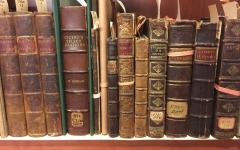
The University Archives attempts to obtain at least one copy of each publication issued by a campus office or organization. While this is not, of course, completely possible, the Archives contains an extensive collection of twentieth-century materials, and has a number of publications back to the early 1800s. The historically important college catalogs run from 1829 to the present, with gaps, and the earliest commencement program is dated 1831.

Other important published sources of information about the college include: campus directories, student handbooks, student and faculty speeches, Charter Day programs, departmental newsletters, annual reports, publicity brochures, materials for prospective students, affirmative action reports, fliers announcing up-coming fraternity parties, news releases, athletic programs, cultural events calendars, play programs, and student newspapers. There are some scattered publications from the various branch and extension colleges which have been affiliated with William and Mary. Several nationally-distributed scholarly journals have been produced at William and Mary, such as the William and Mary Quarterly, Eighteenth-Century Life, and the William and Mary Law Review.

The student newspaper, The Flat Hat, is a rich source of information, announcing campus events as well as reflecting student opinion. It began publication in October 1911 and, except during the fall of 1918, has been continuously published ever since. A beta version of a database allowing users to browse and conduct keyword searches of issues of the student newspaper The Flat Hat is now available for browsing online almost in its entirety from 1911 through 1999 and 2004 through 2007. All issues from September 1939 through May 1950 are available for keyword searching as well as most issues from August 2004 through February 2007.  The remaining issues will be added in the coming months, and keyword searching will be expanded to include all issues.

During the latter half of the twentieth century through 2007 William and Mary published a newsletter including substantial information about policies, campus events, and people on campus for faculty, staff, and others. The William and Mary News is the most recent in that series, in existence from 1972 through 2007.

The Alumni Gazette has been published by the Alumni Association since 1933 and is available in the SCRC in its entirety. Not only does it highlight activities of individual alumni and the organization, the Alumni Gazette also shows what the campus wanted its alumni to know about. Often spotlighted in earlier issues were individual faculty or an academic department. In conjunction with the Alumni Gazette, the William and Mary Magazine provides articles on scholarly or other topics of interest not necessarily relating specifically to the college.

Until a few years ago, Archives staff indexed the Alumni Gazette, the William and Mary News, and The Flat Hat by subject and by personal name. This index is available as a card file in the SCRC. All three of these publications are available on microfilm, except for the most recent years. A copy of the microfilm is available in the Swem Library's microform collection.

The Colonial Echo, the student yearbook, began publication in 1899. There were no volumes produced in 1900 or 1904. In addition to photographs of individual students, it includes information and photographs of student groups and activities, scenes of campus and the surrounding area, and occasionally administrators and faculty. Additional copies of the yearbook are located in the Swem general stacks and in the Reference Department.

William and Mary students have published literary magazines since 1890. The William and Mary College Monthly, later renamed the William and Mary Literary Magazine, was published from 1890 to 1937. Several other literary magazines have also been published over the years, including the Royalist, Seminar, and the current publication, the William and Mary Review.

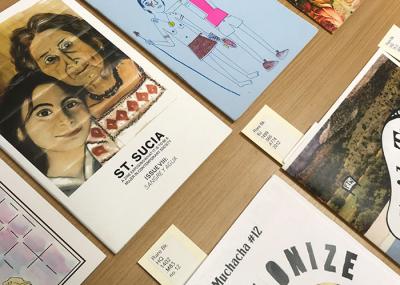
Since the late 1960s, students have frequently produced newspapers and other publications, including literary and creative journals, without official college sanction. The earliest one in the University Archives is the Owl, consisting of one issue published in 1854 by students at the college. The satirical and humorous Fat Head, distributed by The Flat Hat writers, has been in existence since at least 1939. The Archives also keeps copies of other newspapers such as the DOG Street Journal and the Virginia Informer.

Posters announcing events and activities on campus are also a part of the Archives collection. They are a good representation of activities and visitors to campus as well as the relative sophistication of student-produced works. In addition to being listed in the card indexes, there is a finding aid of all posters in the University Archives Poster File.  This finding aid is in a binder on the shelves to the right of the card indexes in the SCRC.

A few current student newspapers and magazines are available through William and Mary's DSpace Digital Repository. Many publications can be searched for in Swem Library's online catalog. The Archives card catalog provides access to all college publications received prior to 2007 including posters. Further information about the card catalog is available at the Access Tools page.

Theses and Dissertations

A copy of every senior honors thesis, master's thesis, and doctoral dissertation written at the College is part of the University Archives in the SCRC. Theses and dissertations can be searched through Swem Library's online catalog. Master's theses and doctoral dissertations are also available in Swem Library's book collection and select years are available through subscription databases available to William and Mary users. Beginning in Spring 2008, Senior Honors Theses are also submitted electronically to William and Mary's DSpace Digital Repository. Copyright to master’s theses, honors theses, and doctoral dissertations is owned by the authors.  Permission to copy more than a third of their content is required in writing by the author or copyright holder.  Contact the University Archivist for further information and for assistance in contacting the author.

Instructions for William and Mary students submitting a thesis or dissertation is also available.

Photographs

The thousands of photographs in the University Archives provide documentation of events, people, distinguished visitors, student activities, and the ever-changing physical campus and buildings. Photographs may be the only records of certain buildings, events, and activities, or may add information to the textual records that only a visual image could provide. In addition to the standard negatives and prints of all sizes, the University Archives Photograph Collection contains slides, and several of the panoramic photographs common in the early part of this century. One of the earliest photographs in the Archives is a daguerreotype taken of the Wren Yard before the 1859 fire.

Additional photographs can be found throughout the SCRC's collections, in scrapbooks, personal papers, and some office files. Supplementary to the actual photographs, some College publications, such as the Colonial Echo and The Flat Hat, contain numerous pictures illustrating student life on campus.

Faculty-Alumni File

The University Archives Faculty-Alumni File Collection consists of materials devoted to individuals having some association with William and Mary, whether as current or past students, faculty, administrators, or members of the Board of Visitors. This collection of several thousand folders contains varied types and quantities of information, from one item to several folders relating to an individual. Materials by or about a person may include: newspaper clippings; reprints of articles and speeches; family and genealogical information; correspondence; papers written while a student; and copies of pictures.

The Provisional List of Alumni, 1693-1888 is available online and includes alumni, faculty, and members of the Board of Visitors. The Catalogue of the Alumni and Alumnae For the Years 1866-1932 is also available online and includes alumni sorted by geographic area as well as by graduation year and alphabetically. The University Archives staff published an index to Commencement programs for the years 1932 to 1976, which is available in the SCRC. Further, for twentieth-century students, there are lists in annual catalogs and campus directories available to researchers. The official "permanent student records" containing transcript information are confidential and therefore not available for use.

Subject File

The University Archives Subject File Collection includes newspaper clippings and other materials relating to the College of William and Mary. It encompasses the College itself, the buildings and physical property, and events which have occurred on campus, rather than the people associated with it over the years. Information on such topics as the evolution of the curriculum, land in other parts of Virginia once owned by the College, winners of awards, honorary degree recipients, and persons known to have been licensed by the College as surveyors can be found in this file. A topic might be represented by one item or several folders.

Artifacts

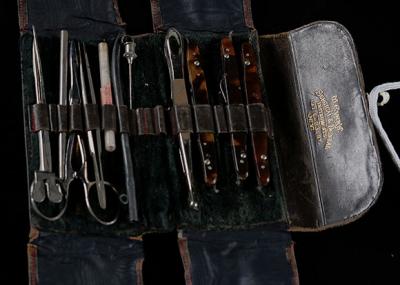
The University Archives Artifact Collection, from 18th century spectacles to a 20th century plastic frisbee, gives a fascinating tangible view of life and are a rich supplement to the paper records in the University Archives. Most of these highly diverse items are representative of some group or activity at the College, but some are in the Archives because they were owned by a William and Mary-affiliated person. The SCRC is also the keeper of such William and Mary treasures as the College and Marischal Maces that lead all formal convocations such as Charter Day and Commencement, the Rector's and Chancellor's badges and chains of office, and two of the original stones which marked the boundaries of the College. The maces and badges are usually on display in the SCRC in the Earl Gregg Swem Library.

Exhibits

Several online exhibits related to the history of the College of William and Mary are available. Regularly rotating exhibits in Swem Library always also include at least one display related specifically to the College of William and Mary.

Donating Material

Items come to the University Archives from a variety of sources. Files from College offices are transferred when the time of their active use is past, and current College publications and reports are sent to the Archives as they are produced. A few items are purchased with private funds from rare book or antique dealers or individuals. For the most part, however, the University Archives relies on faculty, staff, and alumni or their families to help preserve the College's history by donating memorabilia, photographs, and publications. The most insignificant-seeming item from the College's past can often prove valuable for tracing College history, especially where there is a gap in the official records. Information about donating material to the Special Collections Research Center is available at the Donation of Material page, which includes guides for faculty and staff, student organizations, and individuals. University offices should consult the Records Management page and contact a staff member for assistance in transferring records.

Contact Information

If you have any questions about the University Archives, please contact University Archivist Amy Schindler (757-221-3094).